
NEWS ANALYSIS
A Firing Squad on Your Phone: Is America Being Conditioned to Accept Public Executions?
The Pentagon wants Americans to watch a convicted mass murderer's execution live. But could broadcasting death to the public have consequences far beyond justice?
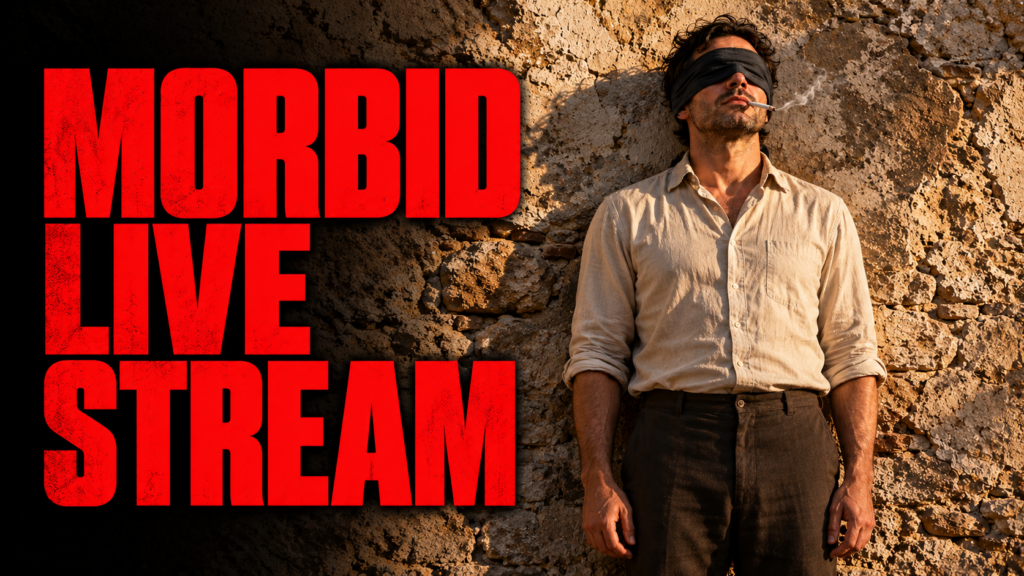
Watch the WKE report
Imagine opening your phone, scrolling through social media, and discovering that the United States government is preparing to livestream a man being executed by a military firing squad.
Not a movie. Not a reenactment. A real execution, carried out by American soldiers, with the public invited to watch.
That’s the extraordinary proposal now facing the country.
On December 3, 2026, former Army psychiatrist Nidal Malik Hasan is scheduled to be executed at Fort Hood, Texas, where he killed 13 people and wounded 32 others during a mass shooting in November 2009.
The Pentagon announced plans to broadcast his execution live over the internet. But as of October 11, President Donald Trump has said he will make the final decision about whether the livestream goes ahead.
While much of the public debate has focused on Hasan’s crimes and whether he deserves execution, there’s another question worth asking.
Why does the government want the American public to watch someone die?
And perhaps more importantly, what happens to a society when watching government-sanctioned killing becomes something ordinary people can do from their living rooms?
Why Make the Execution Public?
According to Reuters, Defense Secretary Pete Hegseth has argued that broadcasting Hasan’s execution would demonstrate the serious consequences of committing such crimes.
The military has scheduled the execution for 1 p.m. Central Time on a Thursday, at approximately the same time of day and on the same day of the week that Hasan carried out his attack in 2009.
The symbolism appears intentional.
President Trump has also suggested that showing the execution could discourage future criminals.
In comments reported by The Washington Post, Trump said:
“By showing it, maybe other people won’t be doing what he did.”
This is the government’s stated justification: deterrence.
The idea is straightforward. Show people the ultimate punishment, and perhaps they’ll think twice before committing horrific acts.
But the question of whether executions actually prevent murders has been debated for decades.
In 2012, the National Research Council reviewed decades of research and concluded that existing studies could not reliably determine whether capital punishment increases, decreases, or has no effect on homicide rates.
And that research wasn’t even examining the effects of broadcasting executions to millions of potential viewers.
So we don’t currently have convincing scientific evidence that turning an execution into a nationwide livestream would prevent crimes like Hasan’s.
We do, however, have history.
America Used to Treat Executions as Entertainment
For much of American history, executions were public events.
People gathered in town squares and outside courthouses to watch convicted criminals hang. Families sometimes brought their children. Preachers delivered sermons, and crowds assembled long before the execution began.
What was supposed to be a solemn demonstration of justice sometimes became a community spectacle.
In August 1936, thousands gathered in Owensboro, Kentucky, to witness the hanging of Rainey Bethea.
Instead of serving only as a warning about criminal punishment, the event became notorious for its enormous crowd and carnival-like atmosphere.
Another public hanging occurred in Missouri in 1937.
As public attitudes shifted, executions increasingly moved behind prison walls, away from the crowds that had once gathered to watch.
The Associated Press documents this history, including how public spectacle contributed to opposition to open executions.
For nearly 90 years, executions have generally been conducted away from mass public audiences.
In 2001, the execution of Oklahoma City bomber Timothy McVeigh was shown by closed-circuit television to selected people affected by his crimes. That was very different from making an execution available to the general public over the internet.
Now, in 2026, the Pentagon is proposing something America has never done on this scale.
The same type of spectacle that Americans gradually rejected nearly a century ago could return through modern technology.
Only this time, the audience wouldn’t have to stand in a courthouse square.
They could simply open a link.
Could Watching Executions Desensitize the Public?
Here’s where psychology enters the conversation.
Desensitization refers to a reduction in a person’s emotional response after repeated exposure to something disturbing.
It’s one reason researchers have spent decades studying the relationship between violent entertainment, news coverage, emotional reactions, and behavior.
A 2009 study published in Psychological Science found that participants exposed to violent video games or movies were slower to respond to situations in which someone needed assistance.
The researchers interpreted the findings as evidence of a desensitizing effect.
But not every psychological consequence of watching violence involves becoming emotionally numb.
A 2014 study of media exposure following the Boston Marathon bombings found that extensive exposure to coverage of the attacks was associated with elevated acute stress.
These findings illustrate an important distinction: violent imagery can influence people’s emotional reactions, but it doesn’t affect everyone in the same way.
Some viewers may become less sensitive. Others may experience fear, anxiety, disgust, or increased opposition to violence.
Neither study examined a government execution broadcast, and neither establishes that watching one would make citizens more obedient.
Still, the research raises a legitimate question:
If repeated exposure to violence can influence how people respond emotionally, what might happen when the violence is officially authorized, deliberately broadcast, and presented as justice?
That question deserves to be explored before the government introduces such a spectacle to the public.
But What About the Victims?
There’s another side of this debate that shouldn’t be overlooked.
Thirteen people lost their lives at Fort Hood. Dozens more were wounded, and their families have lived with the aftermath for nearly 17 years.
For some survivors, witnessing Hasan’s execution may represent an important moment of accountability.
But witnessing an execution personally and broadcasting it to the world aren’t necessarily the same thing.
Former Army Sgt. Alonzo Lunsford, who was shot seven times during the attack, has said he wants to confront Hasan face-to-face at the execution.
Yet, according to CBS Texas, Lunsford opposes turning the event into a public livestream.
That distinction matters.
Wanting justice for the victims doesn’t automatically mean wanting the entire country to watch the punishment.
And opposing a public broadcast doesn’t mean excusing Hasan’s actions.
The debate isn’t simply about whether Hasan should be punished. It is also about what purpose the public audience is supposed to serve.
Is This Part of Something Bigger?
For people familiar with theories about a so-called New World Order, government displays of force often raise suspicions about how populations might be conditioned to accept increasingly authoritarian measures.
One version of the theory suggests that extraordinary exercises of government power become acceptable through gradual public exposure.
Something that initially shocks people eventually becomes familiar. Once familiar, it may become easier to accept.
Applied to the Hasan execution, the concern is that a highly publicized government killing could help establish a precedent for future public displays of punishment.
But it’s important to distinguish a concern about normalization from a claim about a secret agenda.
There is no verified evidence that the proposed livestream is part of a coordinated New World Order plan or a deliberate program to condition Americans for authoritarian rule.
The government’s publicly stated purpose is to demonstrate consequences and discourage serious crimes.
That explanation should be examined on its merits rather than automatically dismissed.
At the same time, governments can establish precedents regardless of whether they intend every possible consequence.
If an execution is broadcast once, future officials could point to it as something the United States has already done.
That doesn’t mean future broadcasts are inevitable.
It does mean that a significant boundary between government punishment and public entertainment would have been crossed.
There’s also another interpretation: some legal experts argue that allowing the public to see executions could increase transparency and expose the realities of capital punishment rather than conceal them.
Whether viewers respond with support, revulsion, or indifference remains an open question.
What Happens After December 3?
Before any broader conclusions can be drawn, several developments remain unresolved.
President Trump has not made a final decision on the livestream. Hasan may also pursue additional legal challenges that could delay the scheduled execution.
If the broadcast does move forward, the public response will matter.
Will millions watch? Will people refuse? Will lawmakers push to prevent future broadcasts? Will the event change attitudes about capital punishment?
Those are outcomes worth observing rather than predicting with certainty.
But there’s a larger issue that won’t disappear even if the livestream is canceled.
Should the government be in the business of making public spectacles out of death?
The answer isn’t necessarily determined by whether the condemned person committed a horrific crime.
Because once a government establishes the public broadcast of an execution as an acceptable practice, the debate is no longer exclusively about one criminal.
It becomes a debate about the power of the state, the role of the audience, and the kind of society Americans want to live in.
For now, there is no evidence of a secret plan behind the proposed broadcast.
But there is a very public proposal to change how Americans experience capital punishment.
And sometimes the most important thing to investigate isn’t a hidden conspiracy.
It’s the precedent being established right in front of everyone.
The question isn’t only whether Americans will watch this execution. It’s whether, if another one is proposed, they’ll still find the idea shocking.
WKE News | Independent News & Analysis
This article separates documented facts from psychological research, historical comparisons, and analysis. The livestream proposal remained subject to a final presidential decision as of October 11, 2026.