
SCIENCE & HISTORY
“Black Don’t Crack”: Why It’s Real—and How to Slow Skin Aging
Melanin helps explain why some skin shows wrinkles later. Here’s how sunscreen, retinol and a simple daily routine can slow visible aging across skin tones.

You know the moment: someone tells you their age, and you make them say it again. “Black don’t crack” turns that reaction into a punchline. There is real biology behind it—and a useful lesson for anyone who wants their skin to age more slowly.
Skin rich in melanin has a natural advantage against some of the sun damage that produces wrinkles. Understanding that advantage points to something practical: much of what makes skin look older is damage we can reduce. Today’s skincare can put that knowledge to work, whatever your complexion.
The sun leaves a record on your face
Your skin has a chronological age, but it also carries a history of sun exposure. Dermatologists call the cumulative changes caused by sunlight photoaging: fine lines, deeper wrinkles, rough texture, uneven pigment and a loss of elasticity.
Part of that damage happens beneath the surface. Ultraviolet radiation damages collagen and elastin, the proteins that help keep skin firm and springy. As that support weakens, the changes become visible. The Cleveland Clinic’s guide to collagen explains why protecting these structures matters.
That is why two people of the same age can have very different skin—and why the amount of protection their skin receives over the years makes a difference.
Where eumelanin changes the picture
Melanin is the pigment that gives skin its color. One form, eumelanin, is brown-black and helps absorb ultraviolet radiation. Lighter skin contains eumelanin too; darker skin generally contains more, along with differences in how pigment is packaged and distributed through the epidermis. That creates greater natural protection against UV damage. Research on skin pigmentation describes how these differences affect the response to sunlight.
Over decades, that protection can show. A dermatology review of aging across skin types describes visible signs of photoaging, including wrinkling, as typically appearing 10 to 20 years later in darker skin than in lighter skin. That is the pattern behind the saying.
The advantage follows pigmentation, so it is not exclusive to Black people. In skin with less natural pigment protection, sun-related lines and wrinkles tend to become noticeable sooner. In darker skin, uneven pigmentation and dark spots can be more prominent concerns before pronounced wrinkling arrives.
And pigment is only part of the story. The same review describes differences in the thickness and organization of the dermis—the skin’s supporting layer—that can also help make facial lines less noticeable. Inherited facial structure, changes in facial volume, smoking and years spent in the sun all affect the result.
Here’s the part you can use
You cannot choose the skin you inherited. You can change how much additional sun damage it accumulates.
Decades of dermatology research have given us practical ways to slow photoaging and improve some of its visible effects across skin tones. Sunscreen reduces the UV exposure driving the damage. Moisturizer makes dry skin look smoother. Retinoids can address fine lines, texture and uneven tone. Together, those steps turn the science into a routine.
This has been tested beyond the beauty aisle. In a randomized trial of 903 adults, daily sunscreen users had less progression in measured skin aging over 4.5 years than people who used sunscreen at their discretion. Consistency made a measurable difference.
The opportunity: Eumelanin gives some skin a head start. Daily protection and well-chosen skincare give every skin tone a way to reduce preventable damage and keep skin looking smoother for longer.
Four products with a clear job to do
A useful routine covers four jobs: protect, cleanse, moisturize and, when needed, treat. The picks below were selected from product formulas, manufacturer information and Amazon listings for their fit with those jobs. Start with the step your routine is missing.
Affiliate disclosure: WKE News earns a commission when you buy through the Amazon links below, at no extra cost to you. As an Amazon Associate I earn from qualifying purchases.
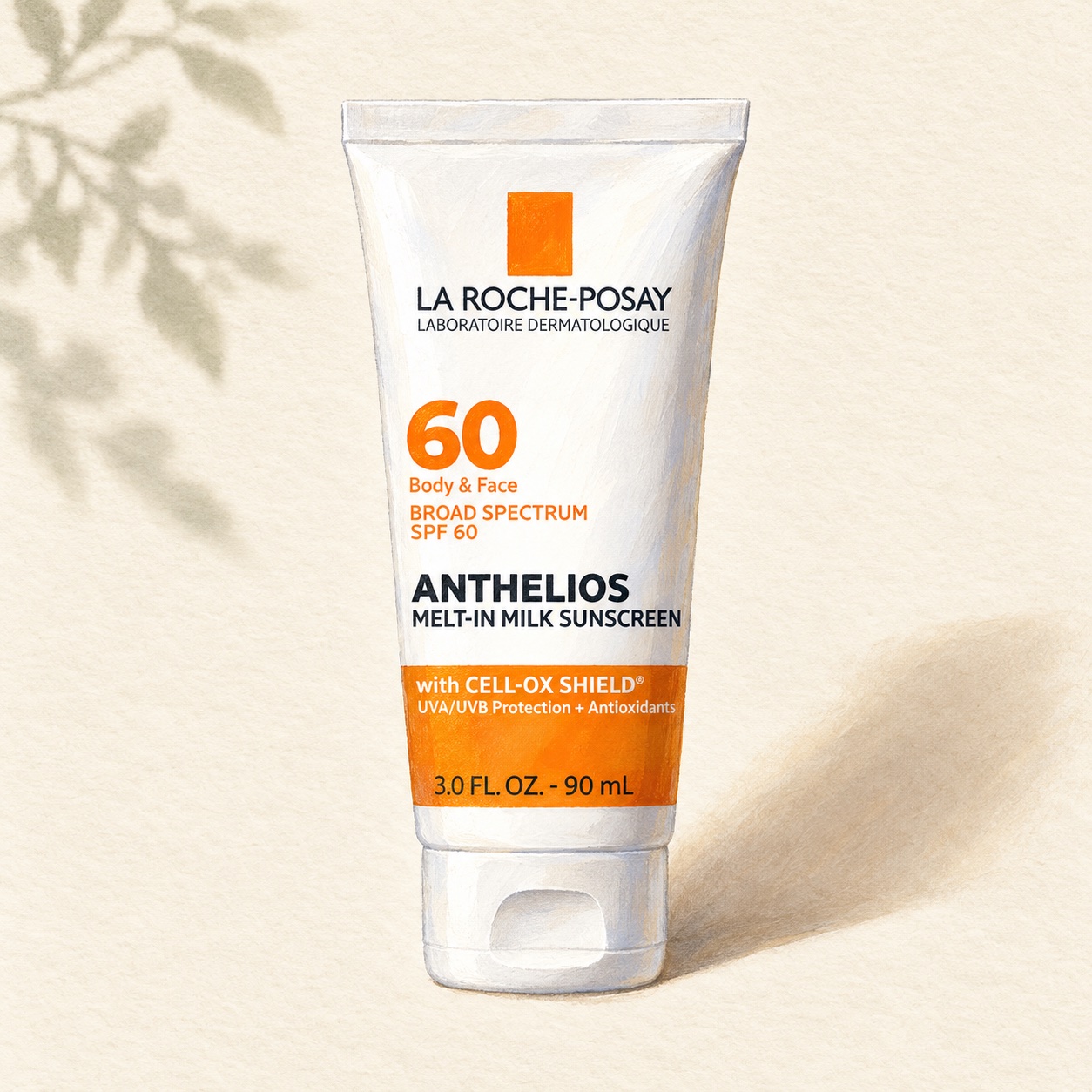
01 / PROTECT · THE DAILY FOUNDATION
La Roche-Posay Anthelios Melt-In Milk Sunscreen SPF 60
For reducing ongoing UV exposure on the face and body.
Selected size: 3 fl oz.
If you make one change, make it daily sun protection. This fragrance-free formula provides broad-spectrum SPF 60 for the face and body, with 80-minute water resistance. It helps reduce the UV exposure that adds up to premature lines, wrinkles and discoloration.
Make it count: Apply generously 15 minutes before sun exposure. Reapply at least every two hours outdoors, after 80 minutes of swimming or sweating, and immediately after towel drying. Remember your neck, ears and hands, and use shade and protective clothing too.
For melasma or stubborn dark spots, a tinted sunscreen with iron oxides can add visible-light protection. This Anthelios formula is untinted.
View sunscreen on Amazon Paid link · Check the current price, seller and reviews.Keep the smoothness you’re working for
That tight feeling after washing is a poor foundation for a skincare routine. Dryness makes fine lines stand out, while irritation can leave dark marks. Gentle cleansing and reliable moisture help keep skin comfortable enough to use the treatments that matter consistently.
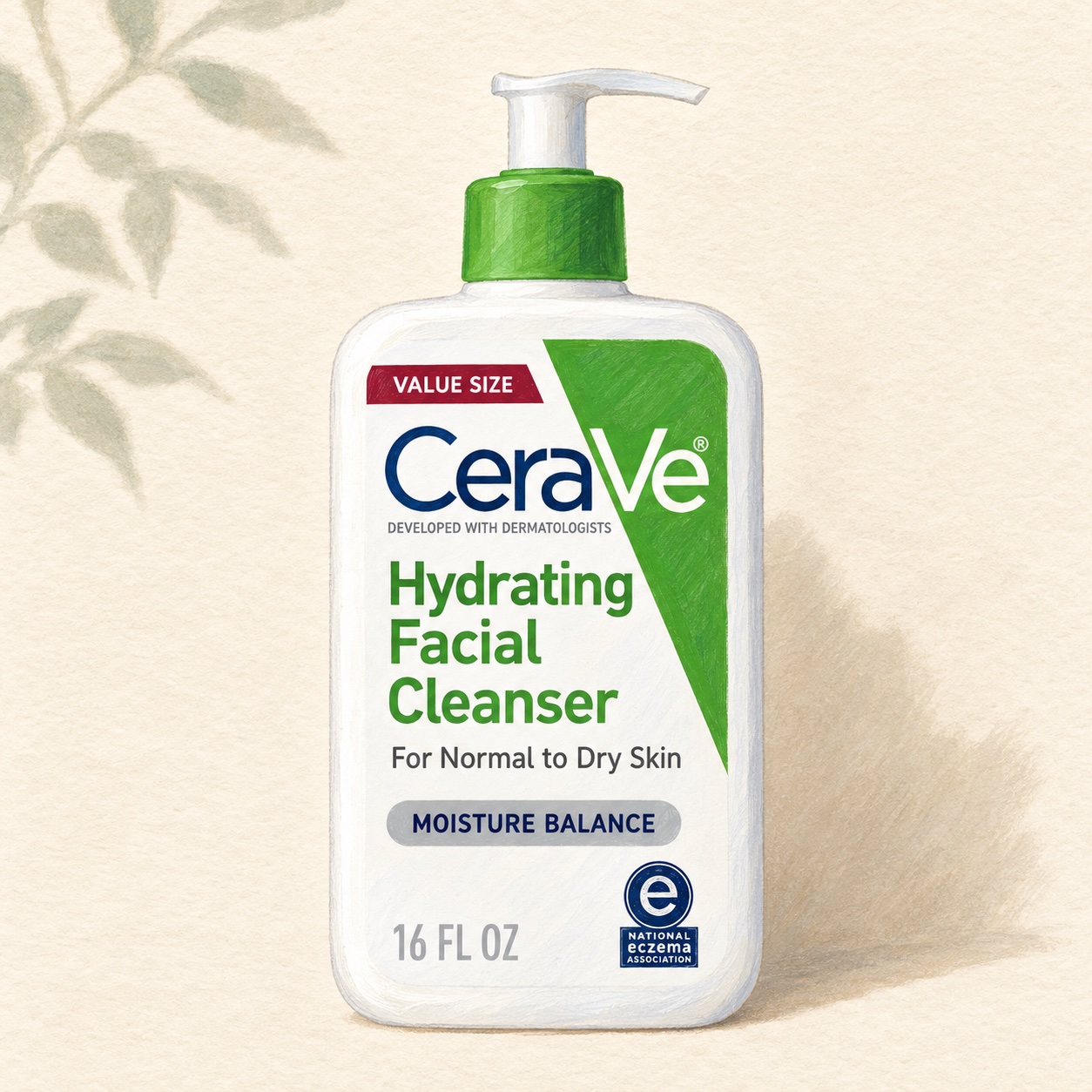
02 / CLEANSE · KEEP IT GENTLE
CeraVe Hydrating Facial Cleanser
A non-foaming starting point for normal-to-dry skin.
Selected size: 16 fl oz.
For normal-to-dry skin, this non-foaming, fragrance-free cleanser offers a gentle daily starting point. Ceramides and hyaluronic acid support a formula designed to cleanse without leaving skin feeling stripped.
Best fit: A face that feels tight or dry after washing. Massage onto wet skin, rinse and skip the aggressive scrubbing. The aim is clean, comfortable skin ready for the next step.
View cleanser on Amazon Paid link · Check the current price, seller and reviews.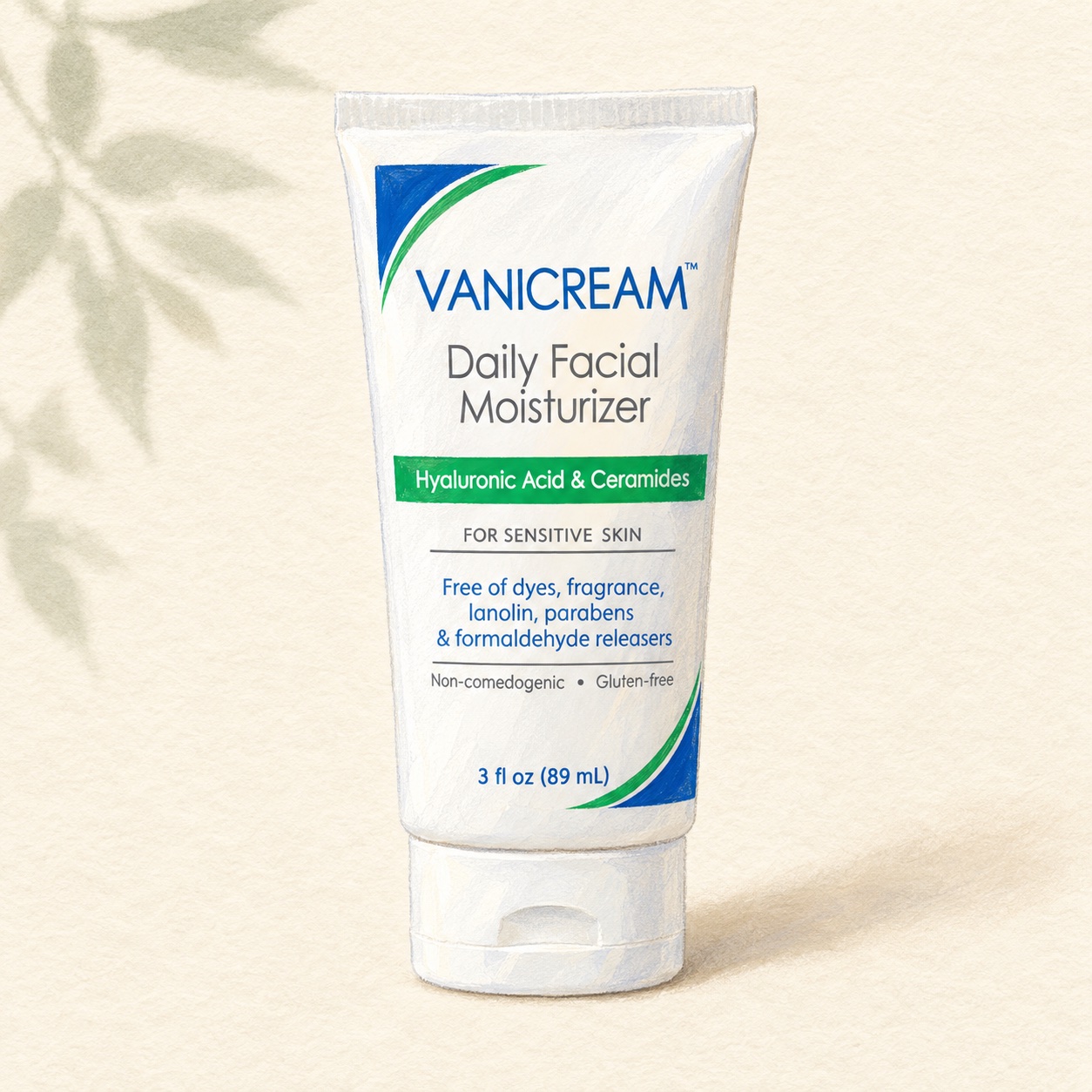
03 / MOISTURIZE · SUPPORT THE BARRIER
Vanicream Daily Facial Moisturizer
Lightweight hydration without added fragrance.
Selected size: 3 fl oz.
This lightweight, fragrance-free lotion combines five ceramides with hyaluronic acid, glycerin and squalane. Its job is to support the skin barrier and replenish moisture, helping dry skin feel softer and look smoother.
Why that matters: Hydration can soften the appearance of fine dehydration lines. Apply morning or evening as needed; follow with sunscreen in the morning, since this moisturizer contains no SPF.
View moisturizer on Amazon Paid link · Check the current price, seller and reviews.Already seeing lines? Add a targeted treatment
Retinoids are vitamin A derivatives with a long history in dermatology. They can support skin renewal and collagen production, helping improve fine lines and uneven tone. Retinol is an over-the-counter member of that family, often used for early lines and rough texture. The American Academy of Dermatology recommends a gradual introduction so the treatment stays tolerable.
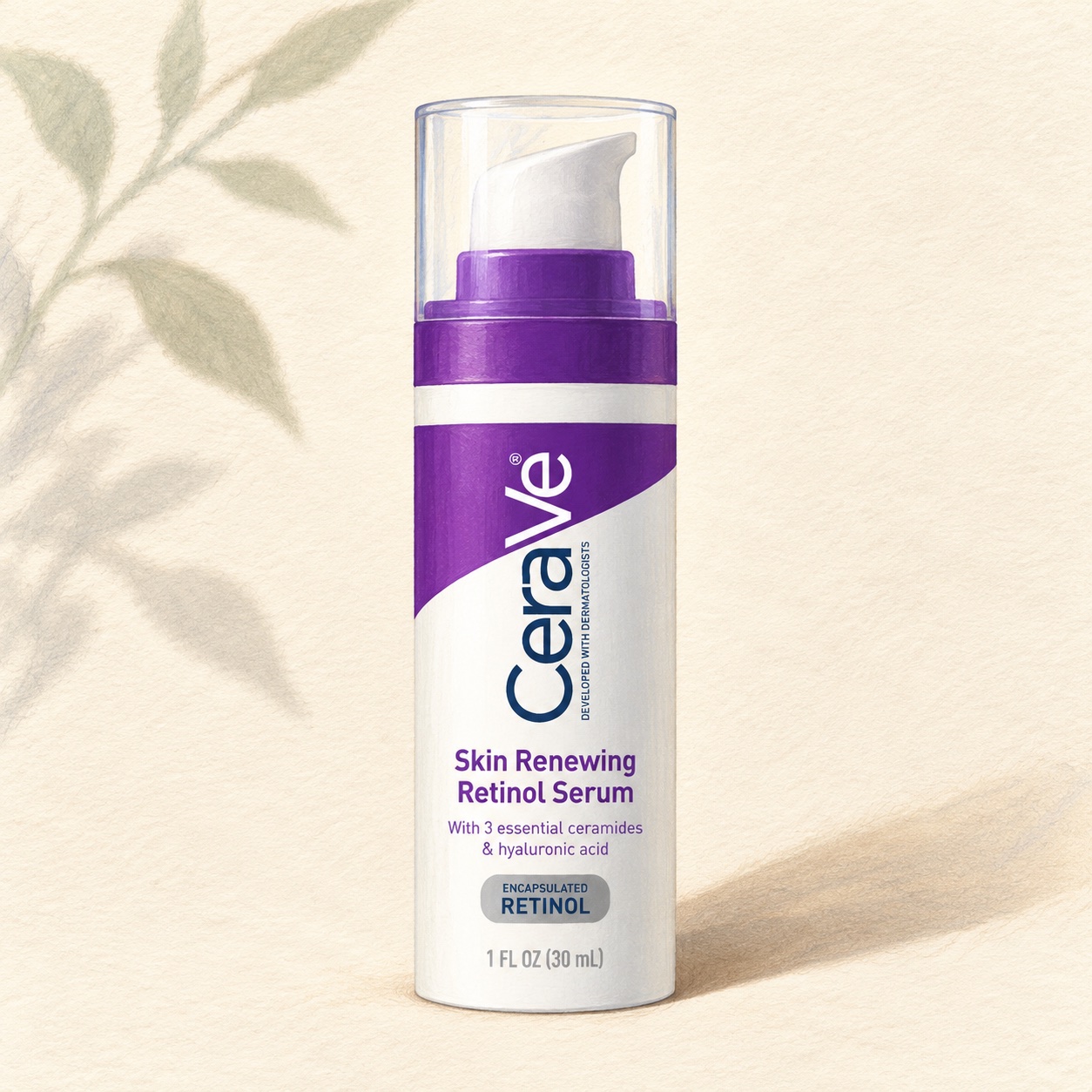
04 / TREAT · OPTIONAL EVENING STEP
CeraVe Skin Renewing Retinol Serum
For adults considering a treatment for fine lines and texture.
Selected size: 1 fl oz.
CeraVe combines encapsulated retinol with niacinamide, hyaluronic acid and ceramides in a fragrance-free serum. It is an approachable option for adding a treatment step while keeping moisture in the routine.
Build the habit: Use at night, starting every other night or less often as tolerated, and follow the label. Keep daytime sun protection consistent. Improvements build gradually; significant redness or peeling is a reason to ease back, especially if your skin develops dark marks after irritation.
Before using retinol: Avoid it during pregnancy. Ask your clinician first if you are planning pregnancy, breastfeeding, or have eczema, rosacea or very reactive skin.
View retinol serum on Amazon Paid link · Check the current price, seller and reviews.Put it on autopilot
Morning
Cleanse gently if needed, moisturize, then apply broad-spectrum sunscreen. Reapply during outdoor exposure as directed. A hat and shade make the routine work harder.
Evening
Cleanse, use retinol on the nights your skin tolerates it, and moisturize. On other nights, keep it to cleansing and moisture.
Introduce one new product at a time. The AAD puts sunscreen and moisturizer first; build from there around the concern you want to improve. A routine you repeat has more value than a shelf full of products you rarely touch.
The head start is inherited. The next step is yours.
“Black don’t crack” points to something real: skin with more natural pigment protection often shows the wear of sunlight later. Melanin and skin structure help explain the advantage. Dermatology helps explain what everyone else can do with that knowledge.
Whatever your complexion, less accumulated sun damage means less preventable photoaging. Protect your skin each morning, keep it hydrated and give targeted treatments time to work. You have more influence over how your skin ages than the saying lets on.
Skincare guide by WKE News. General information; individual treatment needs vary. Cover and product artwork are AI-assisted illustrations. Product details checked October 25, 2026.
DOCUMENTATION
SOURCES & RECEIPTS
Research, dermatology guidance and product specifications checked October 25, 2026. Select VIEW SOURCE to open each reference.
- Aging Differences in Ethnic SkinVashi, de Castro Maymone and Kundu · Journal of Clinical and Aesthetic Dermatology, 2016 · Melanin, skin structure and differences in visible aging.VIEW SOURCE →
- Sunscreen and Prevention of Skin Aging: A Randomized TrialHughes and colleagues · Annals of Internal Medicine, 2013 · Daily versus discretionary sunscreen use over 4.5 years.VIEW SOURCE →
- Clinical and Biological Characterization of Skin Pigmentation Diversity and Its Consequences on UV ImpactDel Bino, Duval and Bernerd · International Journal of Molecular Sciences, 2018 · Eumelanin, pigment distribution and the skin’s response to sunlight.VIEW SOURCE →
- FDA: Tips to Stay Safe in the SunBroad-spectrum protection, reapplication, protective clothing and the limits of sunscreen.VIEW SOURCE →
- American Academy of Dermatology: How to Select Anti-Aging Skin Care ProductsSunscreen, moisturizer, skin-type suitability and realistic expectations.VIEW SOURCE →
- American Academy of Dermatology: Retinoid or Retinol?Uses, gradual introduction, irritation and pregnancy precautions.VIEW SOURCE →
- American Academy of Dermatology: How to Fade Dark Spots in Darker Skin TonesCauses of hyperpigmentation, gentle skincare and tinted sunscreen with iron oxides.VIEW SOURCE →
- La Roche-Posay: Anthelios Melt-In Milk Sunscreen SPF 60Manufacturer specifications · Broad-spectrum SPF, water resistance, ingredients and application directions.VIEW SOURCE →
- CeraVe: Hydrating Facial CleanserManufacturer specifications · Normal-to-dry skin, ceramides and hyaluronic acid.VIEW SOURCE →
- Vanicream: Daily Facial MoisturizerManufacturer specifications · Full ingredient list and directions.VIEW SOURCE →
- CeraVe: Skin Renewing Retinol SerumManufacturer specifications · Encapsulated retinol and supporting ingredients.VIEW SOURCE →
- Aging in Skin of ColorVenkatesh, Maymone and Vashi · Clinics in Dermatology, 2019 · Intrinsic and extrinsic aging, pigmentation and wrinkles.VIEW SOURCE →
- Cleveland Clinic: CollagenCollagen’s role in skin structure and the effects of UV exposure.VIEW SOURCE →
Affiliate transparency: Purchases through the labeled Amazon links may support WKE News. As an Amazon Associate I earn from qualifying purchases.